Government-initiated · B2B digital signing
ESign Pro
Digital signing platform for banks, NBFCs and corporates, with Aadhaar eSign, DSC, wallet billing and webhooks.
Visit live siteContext
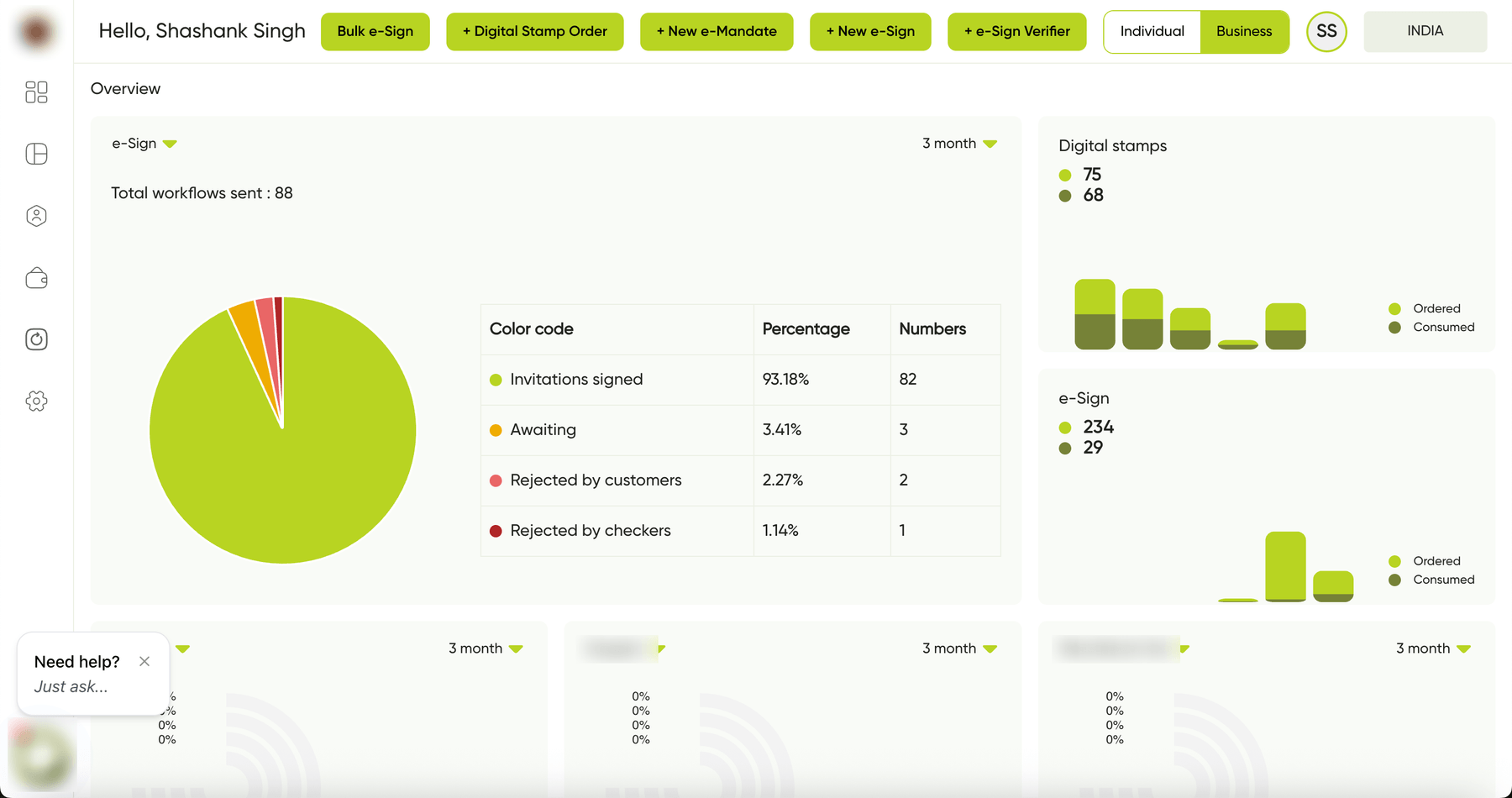
ESign Pro lets organizations upload a document, add recipients, place signature fields and send a signing link. Recipients sign with Aadhaar eSign, DSC, a virtual signature, OTP or consent. Every signed document is legally binding and carries a verifiable audit trail. Each action is billed to the organization's wallet, and the client's own systems get a webhook on every status change.
Problem
Legal signing leaves no room for silent failures. A document can pass through approvals, payments and several signers, and every step has to be recorded. Money moves on every step, so charges had to stay correct even when many documents were sent at once. Hundreds of endpoints needed consistent validation and access rules across banks, branches and roles.
What I did
- Built 100+ REST APIs for legally binding signing workflows: maker-checker approvals and sequential, parallel and hybrid signing, with full audit trails.
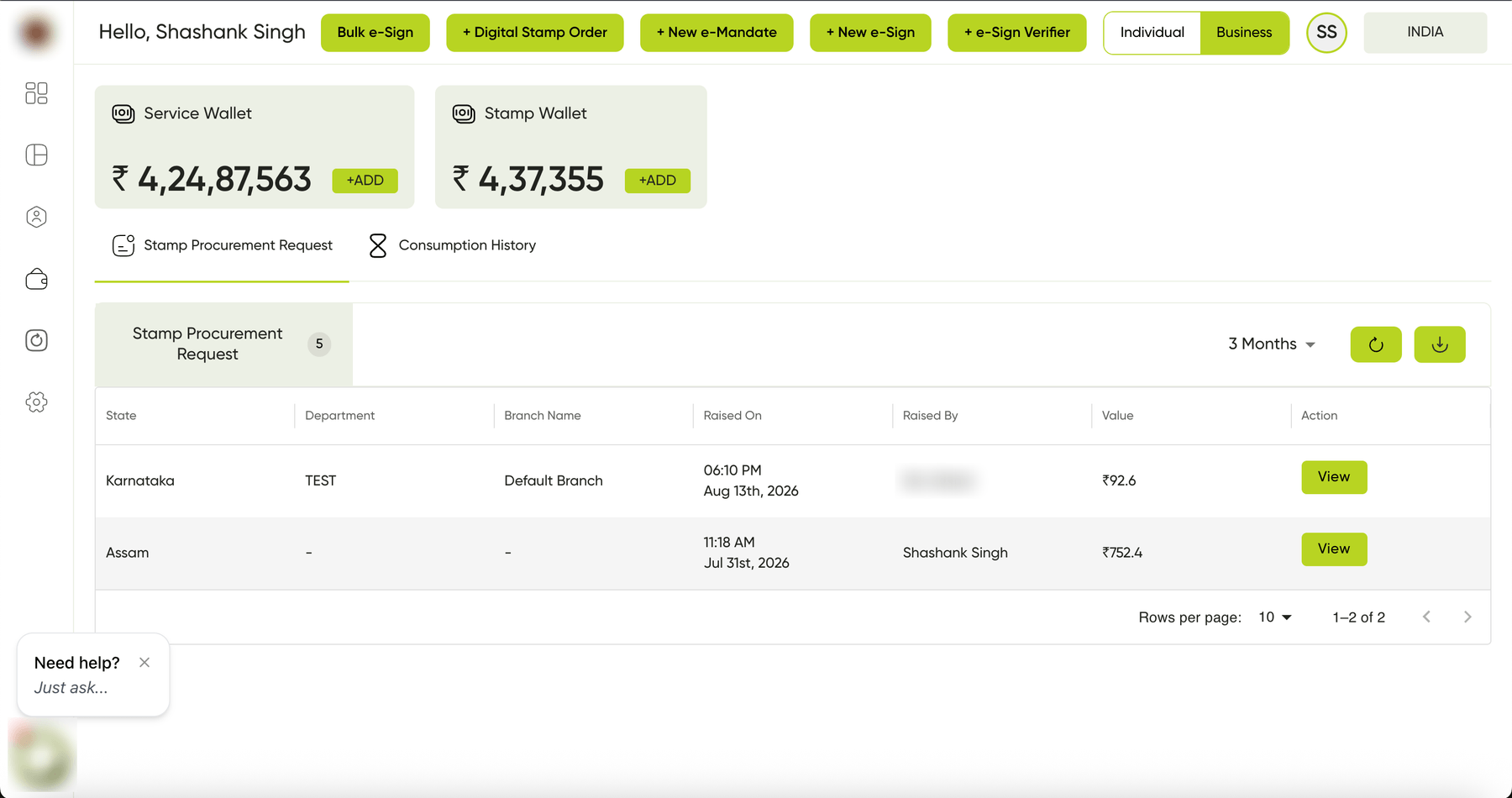
- Built wallet billing that reserves, settles and reverses charges with atomic debits, plus HMAC-signed webhooks and email, SMS and WhatsApp notifications.
- Built React screens in the organization portal, including listings and data tables.
- Standardized error handling, request validation and contract testing. Reached 90%+ Jest coverage and 30% fewer production regressions.
Architecture
Screenshots
Key decisions and trade-offs
Reserve first, charge on completion
Sending a document reserves the charge in the wallet. It becomes final only when signing completes, and is reversed if the document is cancelled or rejected. The debit is one conditional database update that checks the balance and credit limit together, so documents sent at the same moment can't overdraw the wallet.
Three signing modes, enforced in the database
Signers go one by one (sequential), all at once (parallel), or in levels where each level signs in parallel (hybrid). A database constraint blocks invalid mode combinations, so a bad request can't create a document that can never finish.
Webhooks clients can trust
Every webhook body is signed with HMAC-SHA256, so the client can check it really came from the platform. Clients choose which events they want, and every delivery is logged as success, failure or timeout for both sides to audit.
Approvals before money moves
With maker-checker turned on, a document waits for a checker's approval. Only then is the charge reserved and signing links sent. That keeps billing and access in line with how banks already work.